
Robotic Work Capacity AssetOverviewCapacity AssetCertificationMonetizationTokenizationSecondary Markets
Monetization
Lifecycle Stage 4

Monetization

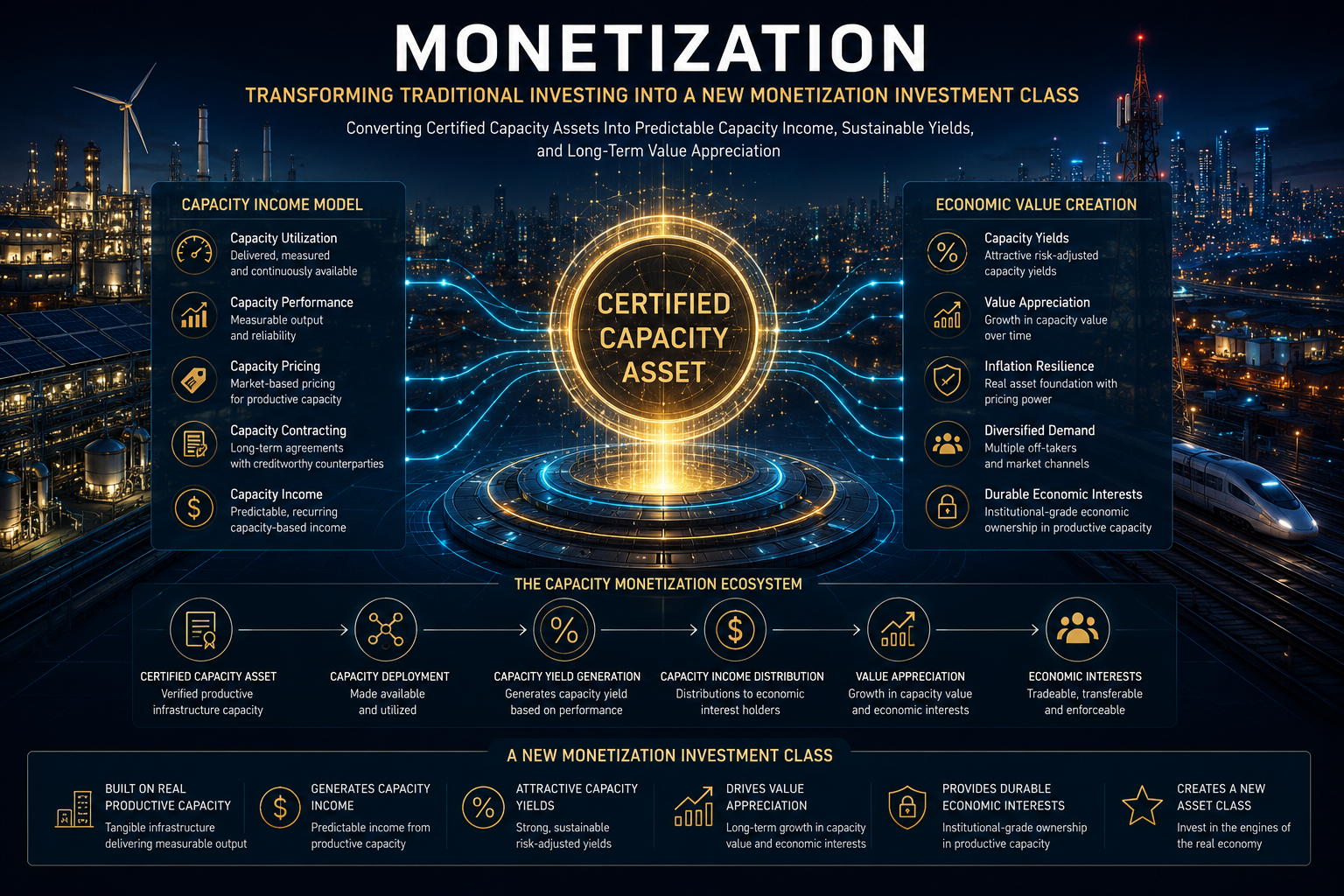
The Robotic Work Capacity Asset generates capacity income through robotics-as-a-service subscriptions, per-task charges, leased automation, and output-based service payments. YUBI connects those proceeds to measured, certified capacity and contractually defined economic interests.

Productive InfrastructureRobotics Infrastructure
Capacity AssetRobotic Work Capacity Asset
Primary Unitsrobot-hours, tasks completed, units handled
Economic Proceedsrobotics-as-a-service subscriptions, per-task charges, leased automation, and output-based service payments
Certification Basisrobot-hours, successful tasks, units handled, cycle time, precision, uptime, and safety
Value Driverslabor substitution value, utilization, task flexibility, software, and switching costs
A New Monetization Investment Class

Capacity income, capacity yields, and durable economic interests.

Capacity Income

Robotics-as-a-service subscriptions, per-task charges, leased automation, and output-based service payments generate proceeds attributable to productive capacity.

Capacity Yields

Contractual participation converts measured performance into defined economic distributions and capacity-based yields.

Value Appreciation

Labor substitution value, utilization, task flexibility, software, and switching costs influence long-term capacity value and the value of associated economic interests.